European heatwaves expose urgent cooling and ventilation gaps in schools, hospitals and care homes
PDF | 855.17KB


Extreme heat and heat waves are no longer an exceptional weather event in Europe. They are becoming a recurring public health risk – especially in buildings that were never designed for today’s hotter summers. Schools, hospitals and care homes are among the most exposed places: Millions of children and teachers, patients, older people, and healthcare workers spend long hours indoors, often with limited options to escape high temperatures. As a provider of HVAC-R* solutions, Daikin contributes technologies that can help make public buildings more climate resilient while reducing energy consumption during operation, depending on system design and usage conditions.
Educational buildings account for 17% of the EU’s non-residential stock, most built between the 1950s and 1980s. Every day, 93.3 million young people learn in them.1) Currently, around 16,650 schools (4.2%) in Europe already experience days with maximum temperatures above 30°C during the school year.2)
While EU-wide data for hospitals and care homes is limited, many of these facilities were not originally designed for today’s more frequent and intense heatwaves and were built over 20 years ago. Older occupants, pregnant women, people with pre-existing medical conditions or chronic diseases, and those unable to leave overheated rooms independently are particularly vulnerable, as their bodies may be less able to regulate temperature.
According to the World Resource Institute, only around 20 % of buildings in Europe have air conditioning, including residential, commercial, and public buildings.3) Research indicates that overheating, poor ventilation and inadequate indoor air quality can negatively affect health. Heat is estimated to cause around 175,000 deaths across Europe, according to the World Health Organization.4) Today, renovation strategies for older public buildings are becoming a health protection priority for Europe.
The “Renovate Europe” initiative states that improved indoor climate helps students achieve the same results up to two weeks faster each year (3 - 8% performance gain). Also, better acoustics can improve student accuracy by over 35%. Every 100-ppm reduction in indoor CO₂ is linked to a 0.1–1% drop in illness-related absences at schools.1)

A recent interdisciplinary research project at the Technical University of Braunschweig in Germany is investigating the impact of heat stress and indoor air quality on the health of hospital patients, with the aim of developing model solutions for building-related interventions and retrofit measures. First results are expected end of 2026.5)
“Cooling strategies for schools, hospitals or care homes must go beyond air conditioning alone. A resilient approach starts with reducing the cooling demand first, as limiting heat gains can lower reliance on mechanical cooling systems. Where additional cooling is needed, modern HVAC* technologies can help maintain comfortable and healthy indoor environments.” Mert Gönlüsen, General Manager SBU Commercial at Daikin Central Europe
Daikin supports expert calls to address heat risks at schools, hospitals or care homes at their source by:
“Renovation projects are often part of broader municipal strategies to increase climate resilience and support EU’s decarbonisations objectives and applicable legislation. In HVAC* retrofit projects, replacing fossil-fuel-based heating systems with heat pump solutions can support heating, cooling and hot-water supply with reduced operational energy demand, depending on the building, system design and operating conditions. Model calculations6) for a specific commercial-building scenario indicate that a Daikin cascade heat pump solution combining air-to-water and water-to-water heat pumps may achieve a return on investment (ROI) of 2.6 years, subject to the assumed gas-to-electricity price ratio and project-specific conditions. Beyond economic considerations, well-designed HVAC* renovation can also help improve thermal comfort and indoor conditions for occupants such as students, patients, teachers and nursing staff.” Mert Gönlüsen, General Manager SBU Commercial at Daikin Central Europe
According to “Renovate Europe” renovation programs have the potential to reduce energy use by up to 80% in approximately two million buildings across Europe, depending on the building type and scope of renovation.1)

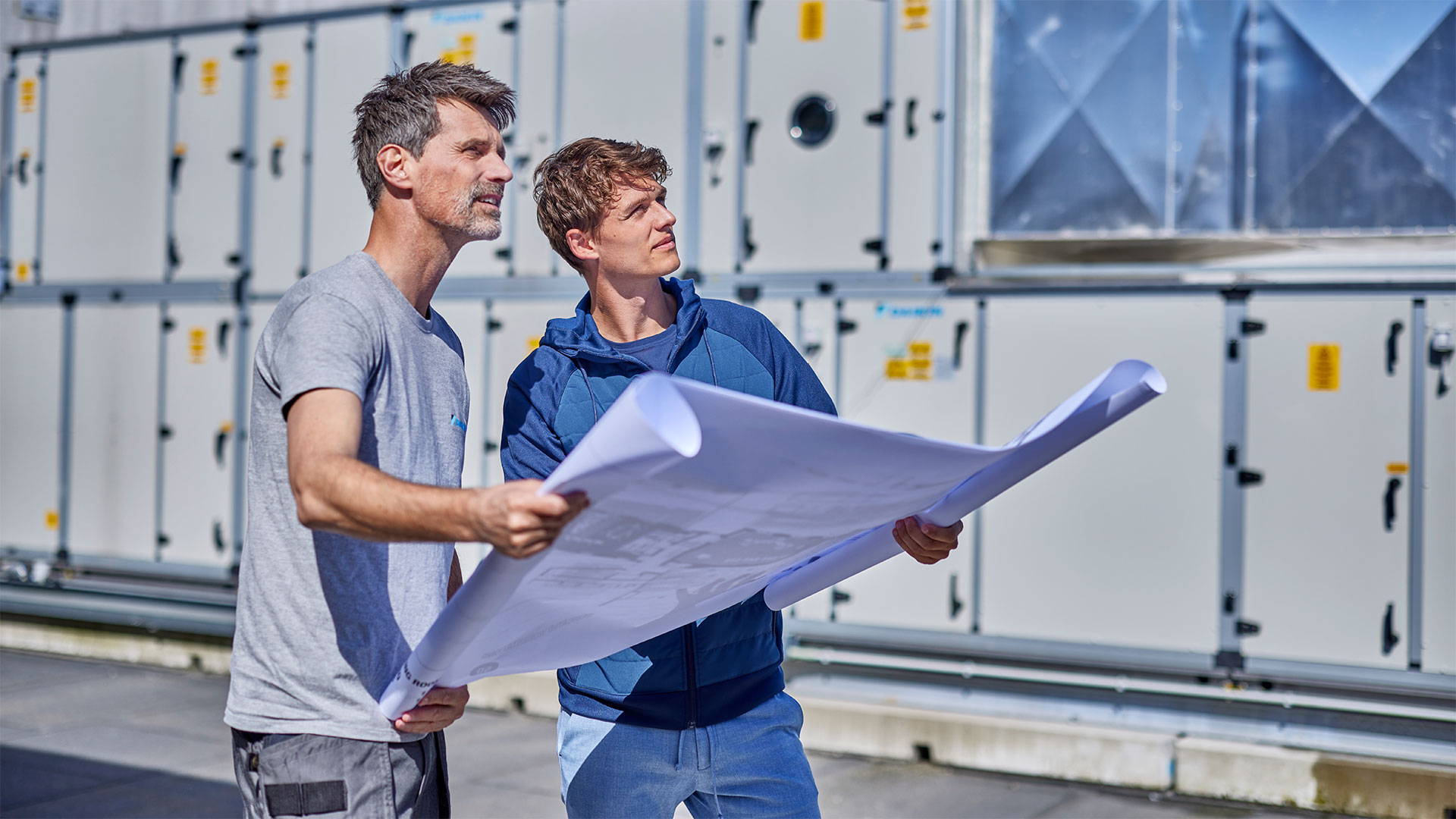
Because no two public buildings are alike, renovation strategies need to reflect each building’s size, existing infrastructure, room use and operating schedule. Daikin’s broad HVAC* portfolio supports this approach with solutions for heating, cooling, ventilation, heat recovery, indoor climate control and energy management:
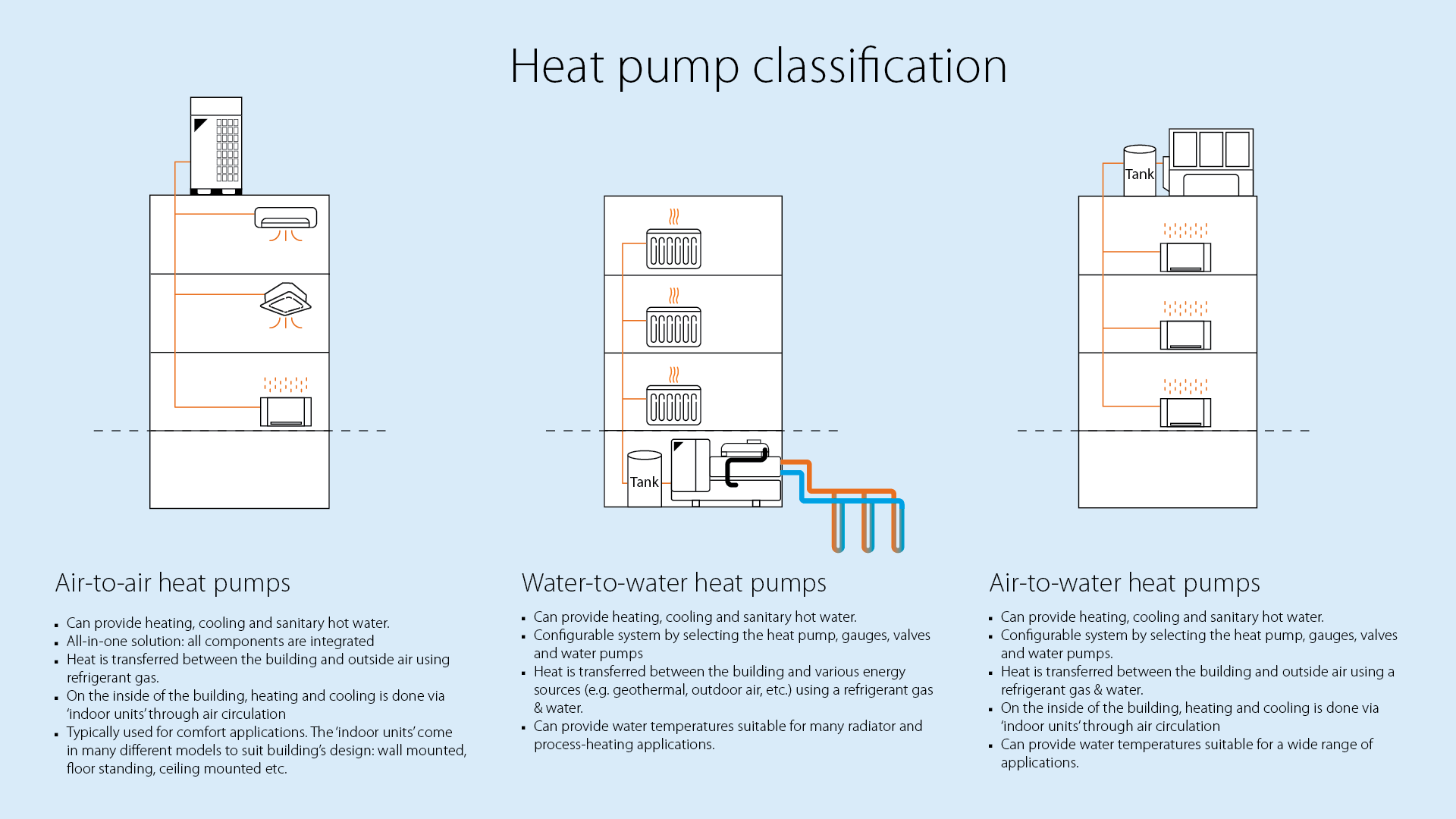
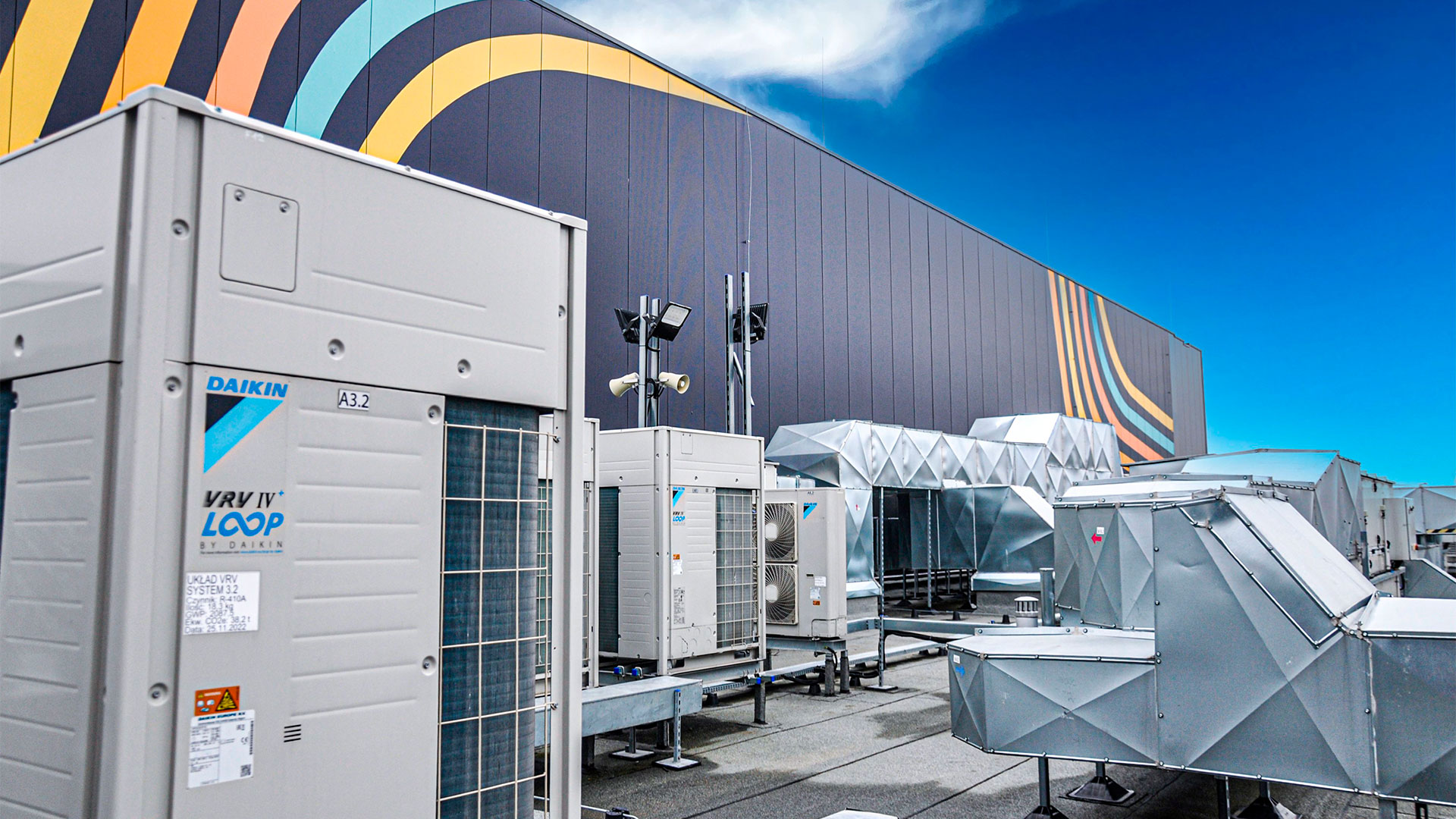
At the centre of Daikin’s retrofit portfolio is Daikin VRV, an air-to-air heat pump solution designed for commercial and public buildings. Compact outdoor units, flexible refrigerant piping options and a broad range of indoor units – including cassette, concealed, wall-mounted and floor-standing models – allow the system to be adapted to different room layouts and building structures.
Individual room control and phased installation can support renovation work floor by floor or wing by wing, helping to reduce disruption in occupied schools, hospitals and care homes. Depending on the system design, VRV Heat Recovery can provide simultaneous heating and cooling by transferring available heat between building zones rather than releasing it unused.

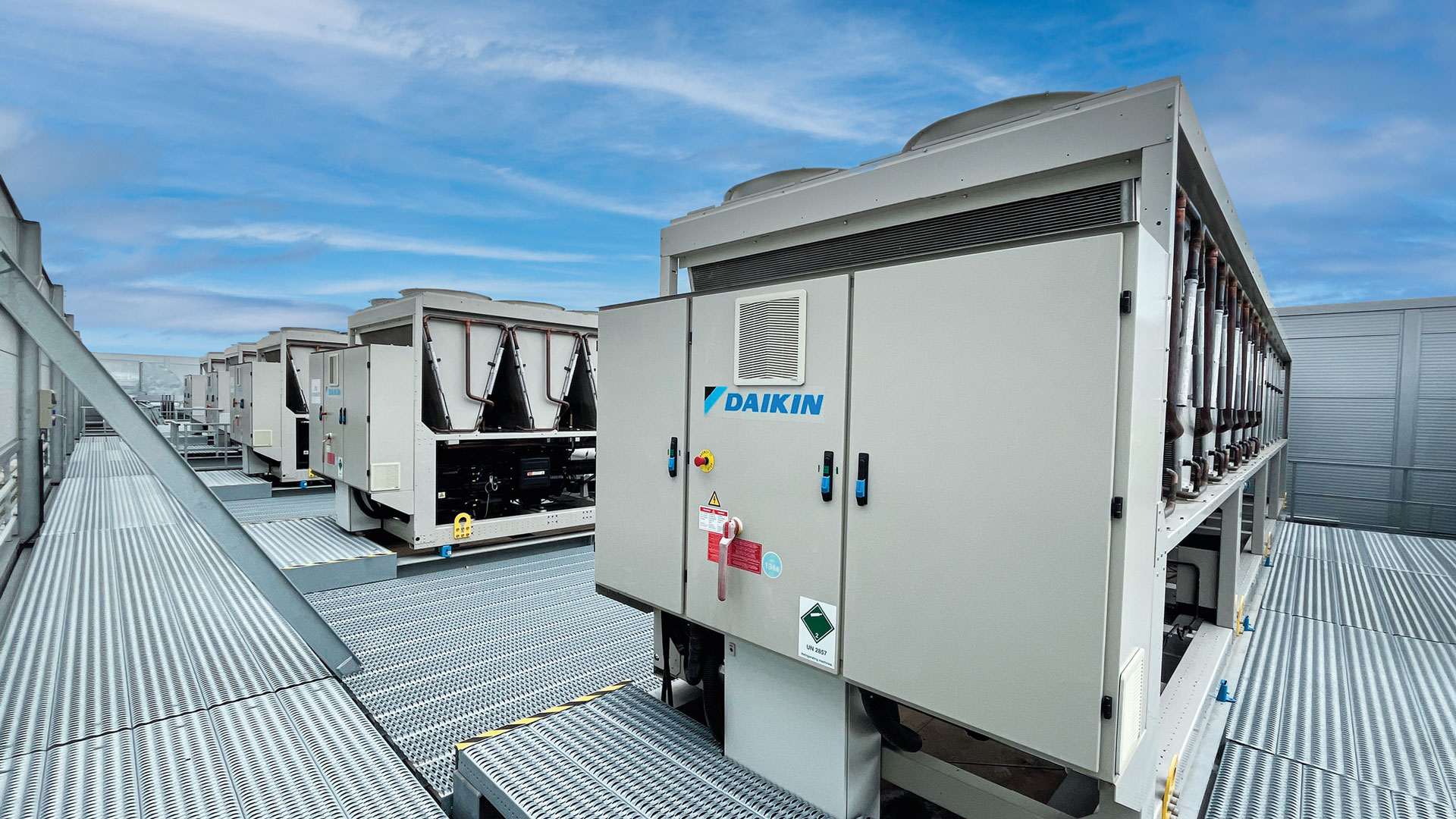
For public buildings with existing water-based distribution systems, Daikin offers air-to-water heat pumps and chillers that can support heating and cooling renovations across different building sizes. The compact EWYT-CZ range, from 16 to 90 kW, is designed for small and medium-sized buildings, while the EWYT-B range, approximately 85 to 630 kW, serves larger centralised applications. For projects that require higher water temperatures, the EWYE-CZ high-temperature heat pump, from 16 to 85 kW, can produce water up to 70°C. Depending on the building and system design, this can make it a suitable option for radiator-based renovations and applications requiring domestic hot water.

For large-scale retrofit projects in hospitals, university campuses and other public buildings, Daikin offers modular water-to-water heat pumps and chillers for centralised heating and cooling applications. The EWWT-Q, EWHT-Q and EWLT-Q ranges are designed for systems using water, ground or energy-loop sources and cover capacities from 100 to 1,280 kW. Their modular, stackable design helps address plant-room space constraints and allows heating and cooling capacity to be expanded progressively, supporting phased retrofit projects.

Daikin complements its heat pump and chiller systems with a broad range of fan coils and indoor terminals for public building renovation projects. Concealed, cassette, wall-mounted and floor-standing units allow heating and cooling to be adapted to different room layouts, usage patterns and installation conditions. This supports room-by-room indoor climate control in schools, hospitals, care homes and other public buildings, depending on the building design and system configuration.
A complete public building renovation should also address indoor air quality and controlled fresh-air supply. Daikin offers decentralised heat-recovery ventilation, compact ventilation units and customised air-handling units with filtration, air treatment and different heat-recovery technologies. These solutions can be integrated with VRV or hydronic systems and, depending on the system design and operating conditions, can help reduce ventilation-related energy losses while supplying controlled fresh air to schools, hospitals, care homes and other public buildings.
Daikin Intelligent Touch Manager and Daikin Cloud Plus bring heating, cooling and ventilation systems together on a centralised management platform. The solutions provide facility managers with a consolidated view of HVAC* operation across individual zones and multiple buildings, enabling them to manage occupancy schedules and temperature settings, monitor energy use, oversee sites remotely and identify operational adjustments that may improve system performance.
For schools, hospitals, care homes and other public buildings, these control solutions help align HVAC* operation with building usage patterns. By adapting operation to room functions, opening hours and occupancy levels, the systems can support efficient building management while maintaining occupant comfort, depending on the system configuration and building operation.

By combining VRV, air-to-water and water-to-water heat pumps, chillers, ventilation, air-handling units, fan coils, heat recovery and smart controls, Daikin provides a broad set of solutions for public-building renovation projects.
“Every renovation project comes with its own challenges, whether it involves ageing infrastructure, limited plant-room space or the need to refurbish buildings in stages. The Daikin portfolio of heating, cooling and ventilation solutions is designed to help planners and facility managers address these challenges while supporting efficient system operation and maintaining indoor comfort through appropriately designed, installed and operated systems.”
Mert Gönlüsen, General Manager SBU Commercial at Daikin Central Europe
Daikin Europe N. V. participates in urban cooling, heating and climate-resilience research projects focused on electrified heating, addressing heat stress and exploring solutions that can support energy-efficient operation in commercial and public buildings. In 2026, Daikin operates 16 HVAC-R* research and development centres in Europe, including the European Development Center (EDC) for heat pump technology in Ghent, Belgium.
References:
6) The model calculations for a specific commercial building scenario indicate a payback period of 2.6 years, depending on defined technical and energy-price assumptions, system design and project-specific conditions. The model calculation is available upon request.
Copyrights pictures: Daikin
About
100+ years Daikin
The story of Daikin has always been shaped by groundbreaking ideas, technological innovations, and dedicated people. It began in 1924 when the young Japanese engineer Akira Yamada founded an enterprise in Osaka to manufacture aircraft radiators with a 15-member team. More than 100 years later, the Daikin Industries group brings future-proof solutions for heating, cooling, ventilation, air purification, and refrigeration (HVAC-R) to global markets.
Read more on 100 Years Daikin
Daikin Industries Ltd.
Daikin Industries is a global leader in heat pump, air conditioning and air filtration technology, employing more than 104,000 people. Founded in Osaka in 1924, it is the only manufacturer in the world that develops and manufactures HVAC-R equipment, compressors and refrigerants in-house. Daikin has been recognized as one of the world’s top 100 innovative companies by Clarivate (UK) and LexisNexis (USA) for its leadership in technology research and intellectual property patents. For its fiscal year 2025 (1 April 2025 – 31 March 2026) Daikin reported a sales result of 28,66 billion euro sales.
Read more on www.daikin.com
Daikin Europe N.V.
The Daikin Europe group is a leading provider of heating, cooling, ventilation, air purification and refrigeration technology across Europe, the Middle East, and Africa. Daikin Europe caters to a diverse customer base within the region by designing, manufacturing, and marketing an extensive range of products, maintenance services, and turnkey solutions tailored for residential, commercial, and industrial applications. The group employs over 14,200 people across more than 57 subsidiaries and operates 15 manufacturing sites in Europe (12), Turkey (1) and the Middle East (2). Refrigeration products include the brands Daikin, Tewis, Zanotti, Hubbard, and AHT. Headquartered in Ostend, Belgium, for over 50 years, the Daikin Europe group is a subsidiary of Daikin Industries Ltd.
Read more on www.daikin.eu
Daikin Airconditioning Central Europe
Daikin Airconditioning Central Europe, founded in 1999 with its headquarters in Vienna, Austria, operates as a subsidiary of Daikin Europe. Its portfolio includes products and total solutions for heating, cooling, ventilation, air purification, and refrigeration in residential, commercial, and industrial settings. With over 700 employees and 3,400 partners, the company manages sales and service activities across 16 countries in Central and Eastern Europe, including Austria, Albania, Bosnia and Herzegovina, Bulgaria, Croatia, the Czech Republic, Hungary, Kosovo, Montenegro, Moldova, North Macedonia, Poland, Romania, Serbia, Slovakia, and Slovenia.
With 'Your Daikin World' at the Vienna headquarters and the 'Daikin Inspiration Park' in Warsaw, the HVAC-R industry and the construction sector have access to two state-of-the-art B2B-experience centers for co-creating customized solutions for hotels, retail, offices, and large commercial applications. Daikin runs ten out of 146 B2B-training centers across the EMEA region in the CE-region. Consumers and homeowners receive consultation at the B2C-Experience center (flagship store) in Vienna.
Read more on www.daikin-ce.com
Media contact
Doris Passler
Manager Corporate Communications Central Europe
Daikin Airconditioning Central Europe HandelsgmbH
Lemböckgasse 59/1/1, 1230 Vienna, Austria
T: +43 (0) 664 24 56 444
M: passler.d@daikin.at